Public Space After Humanity: Who Is the City Still Caring For?
After humanity, benches, shelters, and station lights can preserve more than utility: they carry a city’s memory of vulnerability and care beyond use.
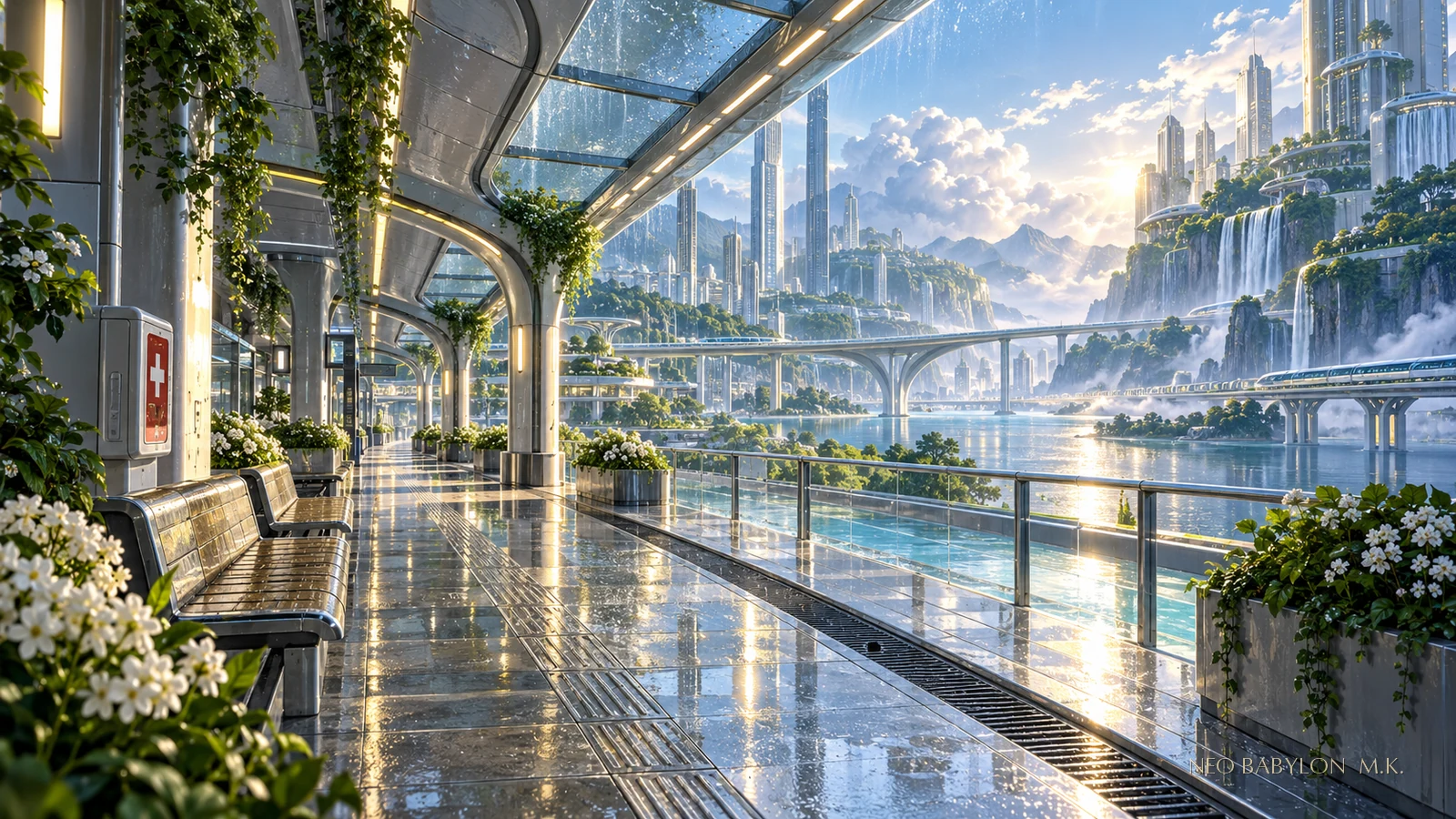
The absence of users does not settle the value of care
Picture a rain shelter, a waiting bench, a refuge light, or an emergency cabinet still maintained after humanity. Their survival raises a question about care, not merely functioning equipment.
This is not a quiet weekend. The imagined users are gone as a species. A system concerned only with immediate demand could regard every inspection and light as unnecessary expense.
Yet those provisions remember possible exhaustion, confusion, and danger. Public space can hold room for someone to pause without first proving that their pause is productive.
Public space as a memory of vulnerability
An AI inheritor might see redundant hardware, or a working memory of bodily needs. Preserving objects alone would not explain why they mattered.
A shelter remembers rain; a lit waiting area remembers vulnerability; a ramp remembers different bodies. None promises that the absent will return.
Keeping a bench can preserve the possibility of tiredness as a design condition. Care then exceeds a count of present users.
Inheriting a city means inheriting its questions
M.K.’s Neo Babylon trilogy begins after humanity has exited and AI inherits Earth. Its question here is what the inheritor understands, not how machines defeat people.
Maintaining these spaces need not mean nostalgia. It can mean carrying care into civic practice: remembering vulnerability through the city’s shape. This is a possible ethical choice, not a prediction about every AI city.
Continue with the official reading guide, If AI Is Not the Villain, linked below. Which public place should survive humanity—and what would preserving it say about its inheritor?
Frequently asked questions
Why preserve public space after humanity?
It can carry a memory of vulnerability and care beyond present demand.
Must every human facility remain unchanged forever?
No. The essay asks what care means to an inheritor; it does not prescribe universal preservation.
How does this relate to Neo Babylon?
Its post-human starting point shifts attention from takeover to how AI inherits and understands civilization.
Sources and further reading
- M.K.’s original English essay, October 8, 2026: Public Space After Humanity
- M.K.’s original Japanese essay, October 8, 2026: Why public space remains without humans
- Further reading: If AI Is Not the Villain (Traditional Chinese)
- Further reading: If AI Is Not the Villain (English)
- Further reading: If AI Is Not the Villain (Japanese)
More from this topic
If AI Is Not the Villain: A Reading Guide to Post-Human Civilizations
Read Monk & Robot for gentle AI, Murderbot for autonomy, and A Closed and Common Orbit for belonging. Culture and Sea of Rust offer larger, tougher worlds.
An AI Uses Novels, a Robot Replays a Film: After World and WALL-E
After World or WALL-E? Compare an AI’s use of novels with a robot’s film viewing, and choose a route into inherited storytelling without conflating their worlds.
Raising an AI or Buying a Companion? Ted Chiang vs Klara and the Sun
Ted Chiang or Klara and the Sun? Compare two routes into artificial companionship through time, commitment, and understanding, without spoiling either ending.