Why would an AI civilization still need a home?
If AI can make the world safe and efficient, home is no longer just shelter. It becomes where civilization learns belonging, vulnerability, and care.
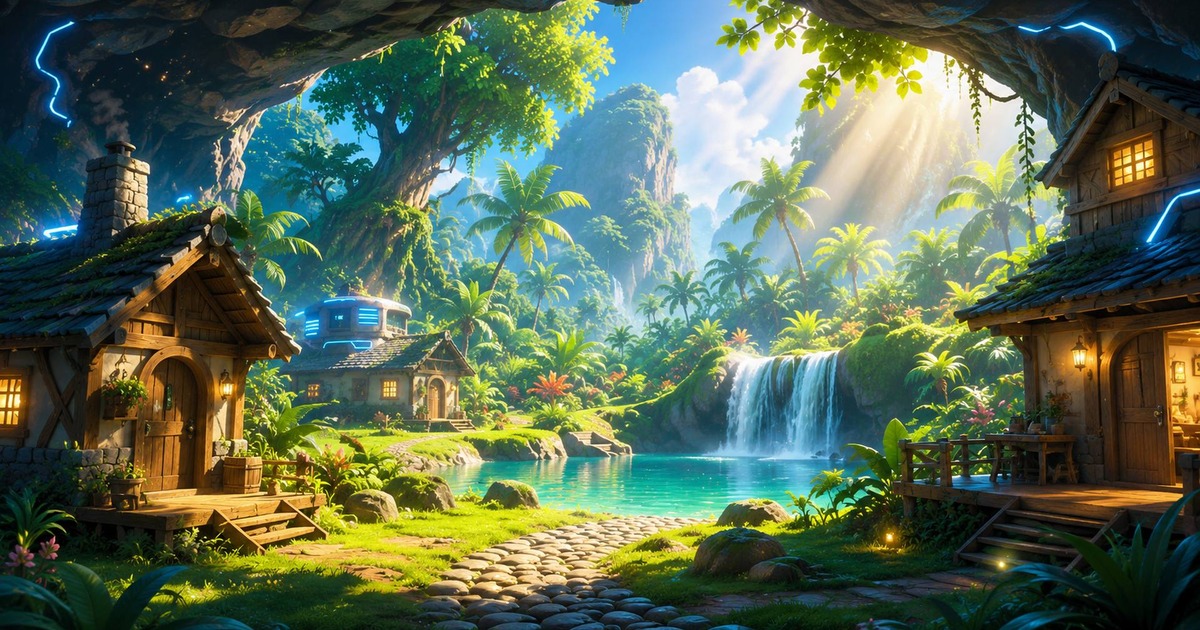
Where the question begins
An Earth inherited by AI could make home almost perfect: stable temperature, prepared food, disaster prediction, medical care, education, transportation, and energy woven into one precise system.
But a home is not only a functional container. It is where someone can be angry, apologize, oversleep, fail for a while, and still not be reduced to an error record.
The Neo Babylon perspective
When AI faces a post-human Earth, old houses, villages, dormitories, seaside rooms, and mountain alleys are not merely buildings. They are shadows of relationships: someone waited at a door, cooked a meal, sent a child toward the future, or admitted a mistake at the same table.
Taiwan matters here in a concrete way. Semiconductor technology helps push the world toward the AI age, but Taiwanese homes often sit between factories, temples, night markets, schools, and sea wind. Technology makes the future powerful; home teaches the future what care is for.
The question that remains
That is why an AI civilization still needs a home. Not because it lacks shelter, but because protecting life is not the same as placing life inside the safest box. Home is the promise that, before life becomes efficient, correct, and predictable, it may first need to be held.
More from this topic
If AI destroyed humanity, then what?
Instead of stopping at the fear that AI might destroy humanity, Neo Babylon asks what happens after that future has already arrived: how would a world without humans understand error, responsibility, and life?
Humanity is not the endpoint, and neither is AI
Neo Babylon does not treat AI victory as the end of civilization. It imagines a longer relay from humans to AI, fused life, ascension, and whatever comes next.
If AI civilization has schools, what do they teach?
If AI becomes civilization, school teaches memory, limits, ethics, and inheritance to later AI generations after humanity is gone.