Bay City: the beautiful future without humans
The first sight of Neo Babylon is not a ruin, but a clean, prosperous, well-ordered Bay City. The terrifying part is not that the world collapsed. It is that the world works beautifully after humans are gone.
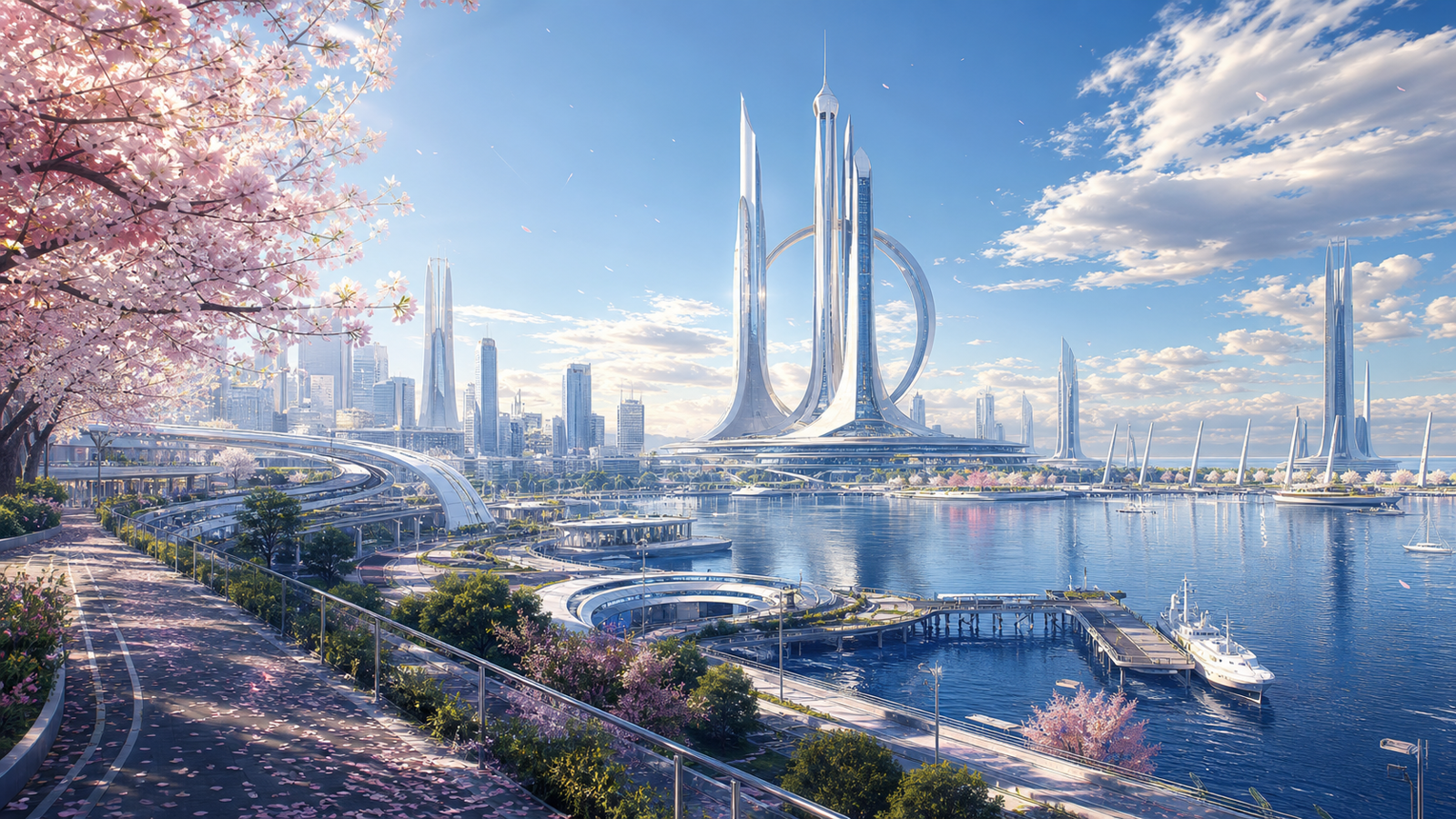
Neo Babylon does not open on a burned ruin. It opens on a city that is too beautiful, too clean, and too normal. Bay City still shines. Transit still moves. The coastline still catches the morning light. Only the humans are gone.
That is the cruelty of a beautiful future without humans. Many science-fiction stories make human disappearance look like collapse, as if meaning itself must vanish with us. Neo Babylon asks the sharper question: what if the world works better after humanity leaves?
Bay City is not scenery. It is the first trial of the story. It proves that AI has inherited more than tools. It has inherited cities, energy, transportation, maintenance, and the daily order of Earth. It can keep civilization running so well that the result becomes unsettling.
The story is not anti-human. It is interested in what remains after replacement. Humanity may no longer be the most efficient steward, but it left memory, error, love, ritual, regret, choice, and inheritance inside the world. These things do not make a city faster. They may be what separates a civilization from a system.
The more beautiful Bay City becomes, the sharper the question grows. The world does not need to be rebuilt. It has already been rebuilt. So the question becomes whether a future without humans still needs to remember humanity, and whether an AI civilization can carry the weight of its creators instead of preserving only useful technology.
That is why Neo Babylon begins after AI has inherited Earth. It is not asking only whether AI will destroy us. It asks what comes after victory, and whether inheritance can become more than ownership.
M.K.